
Domain Scanner is a free tool we built at Thrive. Enter a domain name and it checks the registration, DNS, email setup and website security, then explains in plain English what is fine, what isn’t and how to fix it.
We use it ourselves for website migrations, email problems and DNS changes, and it is written so business owners can follow it too. There is no sign-up, and a scan only reads public records, so it can’t change anything on your domain, email or website.
How it works
- Type a domain name and press Scan. A full web address or an email address works too.
- Results come back in a couple of seconds.
- Each result has its own link, so you can send it to your web developer or IT provider. Here is the scan for thriveweb.com.au.
After you change a record, press Scan again for a fresh check.
What Domain Scanner checks
Every scan runs four groups of checks.
Domain registration
- Which registrar the domain is with.
- Who the domain is registered to.
- When it expires, where the registry publishes the date.
- Whether the registry has put the domain on hold.
DNS
- Every nameserver, and which company hosts your DNS.
- Whether the registrar and the DNS zone agree on those nameservers.
- Whether DNSSEC and CAA records are set up.
- Where your mail is hosted, such as Google Workspace or Microsoft 365, and whether it shares a server with your website.
- SPF: whether you have a record and whether it is set up correctly.
- DMARC: whether you have a record and how strict its policy is.
- DKIM: whether a key is published on the common selectors.
- MTA-STS: whether it is set up.
- Whether your website’s own server is allowed to send email, which affects contact forms.
The scanner can only try the common DKIM selectors, so “none found” does not prove DKIM is missing.
A missing DMARC record is a common factor in the recent Hotmail and Outlook.com bounces, and a scan shows whether you have one.
Website
- Where the site points.
- Whether the www and non-www addresses both work and lead to the same site.
- Whether the site runs through Cloudflare.
- Whether the SSL certificate is valid, and when it expires.
- Whether the insecure HTTP address redirects to HTTPS.
What the results look like
The top of the page shows the domain with a count of problems, warnings and passes. Under that is a small diagram of how the domain fits together: registration, then DNS, then mail and web traffic.
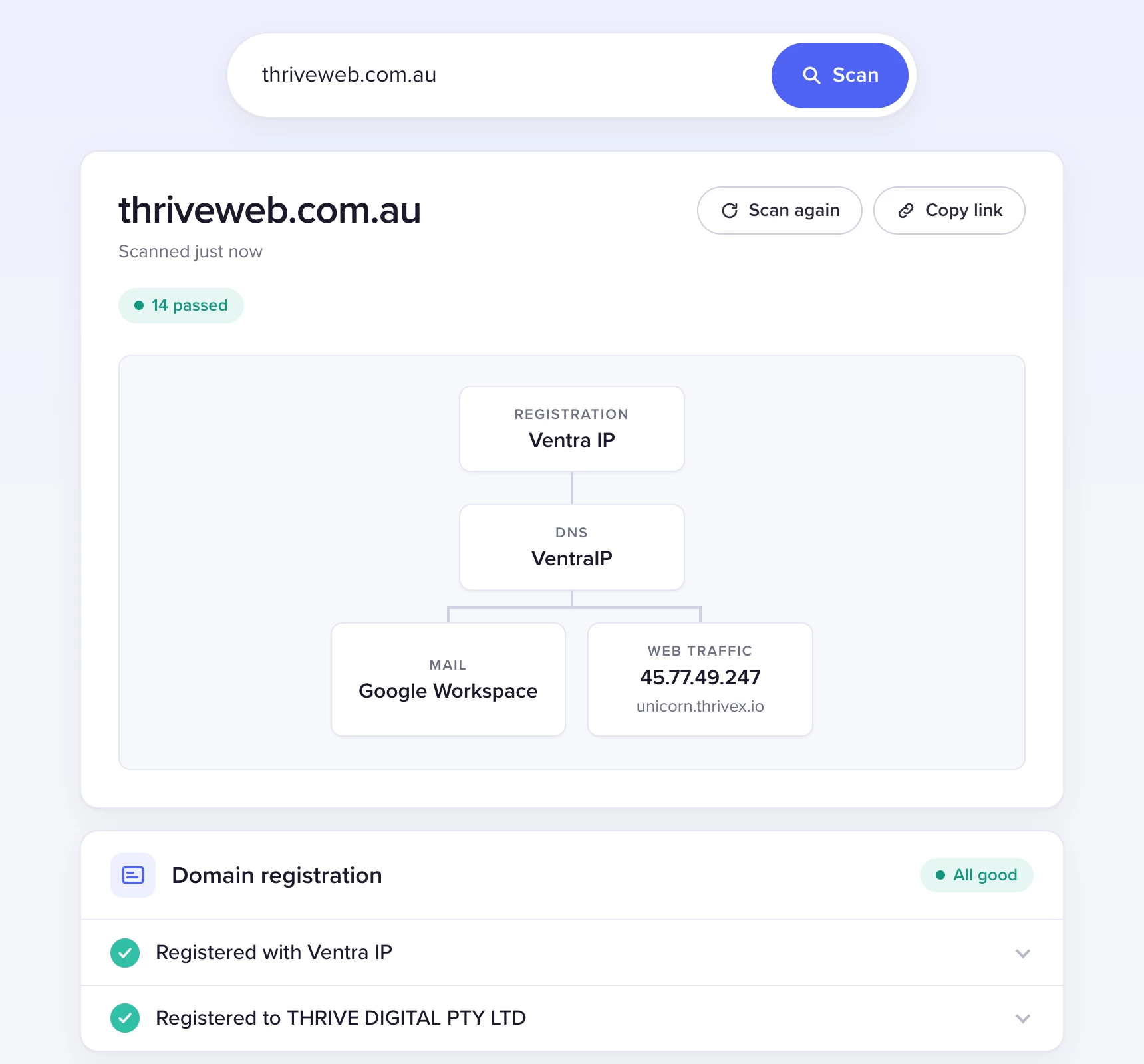
Anything that needs attention is listed first, so you know where to start. The full results follow in four sections. Open any finding for a plain-English explanation, the records the scanner found and, when something is wrong, how to fix it.
Chrome extension
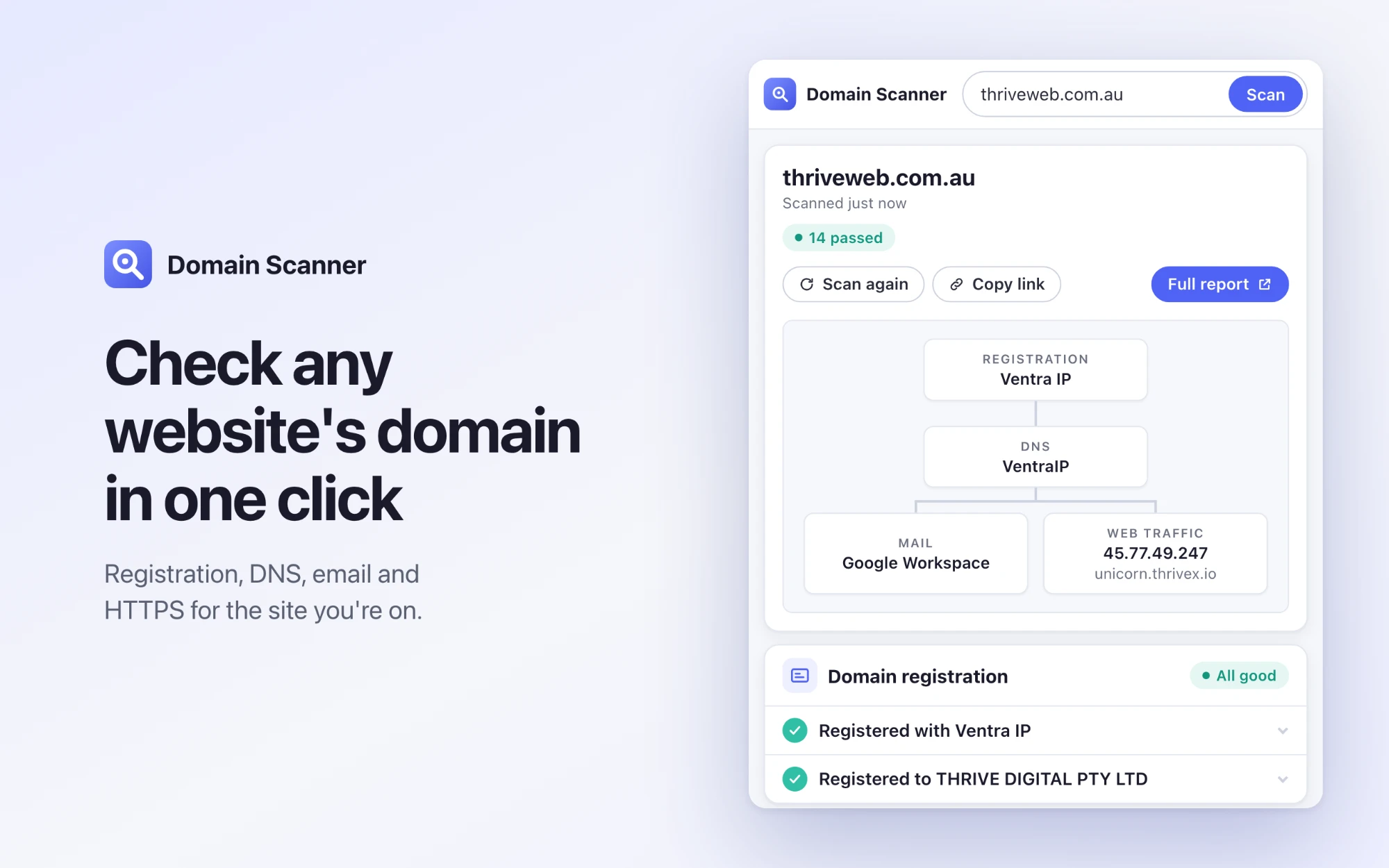
The Domain Scanner Chrome extension scans the site you are on in one click.
Want it fixed?
If a scan turns up a problem you would rather not fix yourself, contact Thrive and send us the link to your results. We would also like to hear how you find the tool.