Could businesses soon see how often they appear in ChatGPT answers, and how many people click through to their websites?
A reported ChatGPT analytics feature suggests OpenAI is working on exactly that. It could give business owners a clearer view of their visibility in ChatGPT.
People are describing it as a “ChatGPT Search Console”, drawing a comparison with Google’s reporting tool. That is not a confirmed product name, and we haven’t verified a public launch.
Here’s what has been reported, what remains unclear and what businesses can measure now.
What is the reported ChatGPT analytics tool?
Entrepreneur Juozas Kaziukėnas has reported seeing an analytics feature in development within a broader ChatGPT Business Hub.
According to his LinkedIn post, it would show daily figures for:
- Impressions: how often a business appears in ChatGPT responses.
- Clicks: how often users click links to the business’s website.
He reports that access is tied to verified business ownership, with connecting a Shopify store given as an example. These details come from his observations. Availability, eligibility and the final features remain unconfirmed.
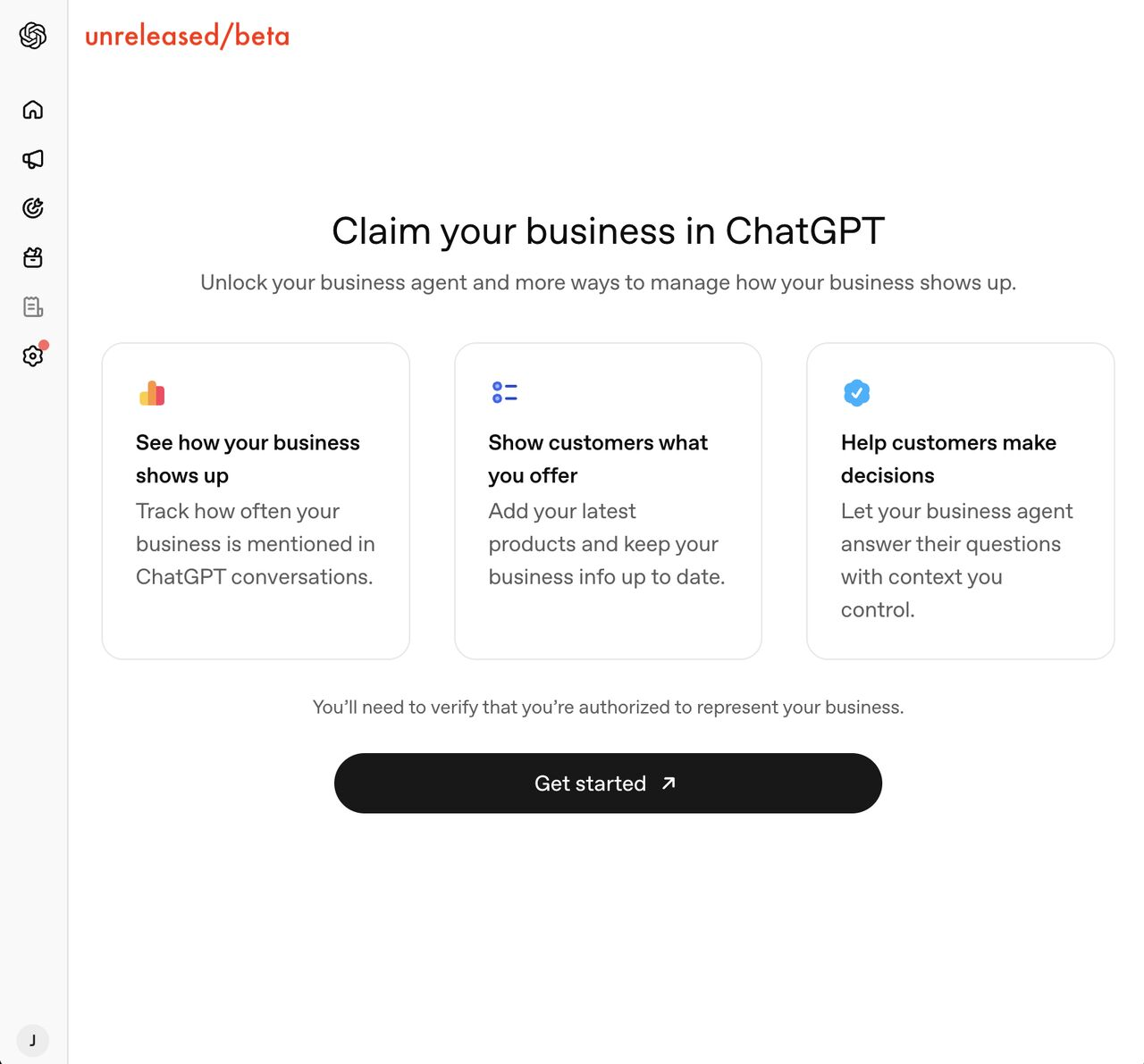
Would it work like Google Search Console?
The reported feature sounds like a mix of Google Search Console and a business profile: somewhere to verify your business and measure its visibility. Whether it will offer broader profile management is still unclear.
However, the reported ChatGPT tool appears more limited. Kaziukėnas says it does not reveal the questions people asked, competitor comparisons or rankings. That means it might show an increase in mentions without explaining what caused it.
We also shouldn’t assume that verification would let businesses submit pages, control answers or improve their placement. None of those capabilities is established by this report.
Why mentions and clicks both matter
A mention is useful information, but it needs context. ChatGPT could name a business in a recommendation, include it in a list of alternatives or discuss it critically. A count alone would not explain which happened.
Clicks tell us something different: someone followed a link to the website. The next question is whether that visit led to an enquiry, booking or purchase.
For a local service business, a recommendation might also lead someone to search for the business later or call directly. Website clicks would capture only part of that journey.
Our view is that these figures could be useful additions to business reporting. They would still need to be considered alongside actual customer activity.
What can businesses track today?
You can start by reviewing traffic attributed to ChatGPT in your website analytics, where that information is available.
Look beyond the number of visits:
- Which pages do those visitors land on?
- Do they make enquiries, book appointments or buy?
- Are the visits relevant to the services and locations you serve?
It can also help to ask new customers how they found you. Our guide to tracking AI visibility covers what you can measure in more detail.
You can test how ChatGPT describes your business, too. Treat those checks as examples of individual answers, rather than a complete measure of your visibility. Answers can vary with the question and context.
What our SEO specialist would like to see
Anton Martin, Thrive’s SEO specialist, would like the reporting to go beyond mentions and clicks. His priorities are:
- Query and topic data: which questions or topics trigger a business mention. Even aggregated data could help identify useful content opportunities.
- Competitor comparisons: how often competitors are recommended instead of our clients.
- Citation sources: which websites and pages ChatGPT draws information from when recommending a business.
- Geographic reporting: visibility by location, particularly for businesses serving local customers.
- API access: a way to bring visibility figures into our regular client reporting.
These are features Anton would like to see, rather than confirmed capabilities. They would help us understand where a business is appearing, what information supports those mentions and which areas need attention.
What we’re watching next
The most useful details will be who can access the reporting, how impressions are defined and whether businesses can see which pages receive clicks.
For Thrive’s service business clients, a key question is whether verification will be available without an online store.
If this reporting becomes widely available, it could help businesses make better decisions about AI search. More mentions alone would not prove that a marketing strategy worked, but reliable data would give us a better starting point.
We’ll update this article as official information becomes available.
Latest update
10 November 2026: Initial article based on the reported feature. A public launch and access requirements have not been verified.